There’s a reason chicken soup has remained a favorite comfort food across generations. Whether you’re looking for a cozy meal on a cold evening, preparing something nourishing for your family, or simply craving a homemade dish that doesn’t require hours in the kitchen, chicken soup rarely disappoints. The challenge is finding a method that delivers deep, slow-cooked flavor without spending an entire afternoon watching a pot simmer.
That’s where pressure cooker chicken soup shines. By using high-pressure cooking, you can transform simple ingredients into a rich, satisfying soup in less than an hour. Better yet, the chicken turns out remarkably tender, the vegetables stay flavorful, and the broth develops a homemade taste that rivals traditional stovetop recipes.
If you’ve never made chicken soup in a pressure cooker before, this beginner-friendly guide will walk you through every step. By the end, you’ll know exactly how to create a comforting bowl of soup that’s perfect for weeknight dinners, meal prep, or anytime you need a warm, wholesome meal.
What Is Pressure Cooker Chicken Soup?
Pressure cooker chicken soup is a homemade soup prepared in a sealed pressure cooker, such as an electric pressure cooker or Instant Pot. Unlike traditional methods that require hours of simmering, pressure cooking uses steam and high pressure to cook food much faster while locking in moisture and flavor.
The result is a soup with:
- Tender chicken
- Rich, savory broth
- Perfectly cooked vegetables
- Minimal hands-on cooking time
Because the pot remains sealed during cooking, flavors concentrate naturally. This means you can achieve the taste of a slow-simmered soup in a fraction of the time.
Why Pressure Cooking Works So Well
Chicken contains proteins and connective tissues that soften beautifully under pressure. The high-temperature environment breaks down these tissues quickly, creating juicy, tender meat without drying it out.
At the same time, vegetables release their natural sweetness into the broth, producing a balanced flavor that tastes like it has been simmering all day.
Why Use a Pressure Cooker for Chicken Soup?
If you’re wondering whether it’s worth using a pressure cooker instead of a stockpot, the answer is yes—especially if you value convenience without sacrificing flavor.
Benefits of Pressure Cooker Chicken Soup
Faster Cooking
Traditional chicken soup may take two to three hours.
Pressure cooker chicken soup is often ready in under an hour, including preparation.
Tender Chicken Every Time
Pressure cooking helps prevent chicken from becoming dry or stringy.
The meat stays moist while absorbing the flavors of the broth and herbs.
Rich Homemade Broth
As the ingredients cook under pressure, the broth becomes concentrated and flavorful without requiring long simmering times.
Less Hands-On Work
After adding the ingredients and setting the timer, the pressure cooker does most of the work.
You won’t need to stir constantly or monitor the pot.
Excellent for Meal Prep
Chicken soup stores well in both the refrigerator and freezer.
Making a large batch means you’ll have quick lunches or dinners ready throughout the week.
Ingredients for the Best Pressure Cooker Chicken Soup
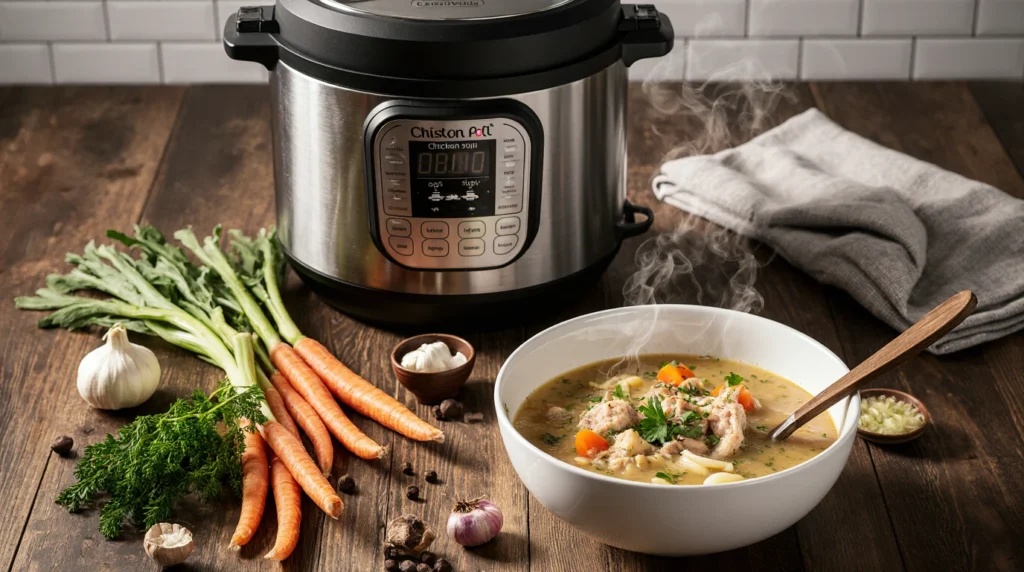
One of the best things about this recipe is its simplicity. Most of the ingredients are common kitchen staples.
Ingredient Table
| Ingredient | Quantity | Purpose |
|---|---|---|
| Chicken (bone-in or boneless) | 2 pounds | Main protein |
| Chicken broth | 6 cups | Flavorful soup base |
| Carrots | 3 medium | Natural sweetness |
| Celery | 3 stalks | Classic soup flavor |
| Onion | 1 large | Aromatic base |
| Garlic | 4 cloves | Adds depth |
| Olive oil | 1 tablespoon | Sautéing vegetables |
| Bay leaves | 2 | Herbal flavor |
| Dried thyme | 1 teaspoon | Earthy seasoning |
| Salt | To taste | Enhances flavor |
| Black pepper | To taste | Mild spice |
| Egg noodles (optional) | 2 cups | Makes soup heartier |
| Fresh parsley | 2 tablespoons | Fresh garnish |
Optional Additions
You can easily customize your soup by adding:
- Mushrooms
- Corn
- Green beans
- Peas
- Spinach
- Kale
- Fresh lemon juice
- Parmesan cheese
These ingredients add variety without complicating the recipe.
Kitchen Equipment You’ll Need
You don’t need an elaborate kitchen setup to make delicious pressure cooker chicken soup.
Essential Tools
- Pressure cooker or Instant Pot
- Cutting board
- Chef’s knife
- Measuring cups
- Measuring spoons
- Wooden spoon
- Ladle
- Tongs
- Two forks for shredding chicken
A pressure cooker with a sauté function makes preparation especially convenient because you can cook everything in the same pot.
How to Prepare Your Ingredients
A few minutes of preparation before cooking helps ensure even cooking and better flavor.
Step 1: Prepare the Chicken
You can use:
- Boneless chicken breasts
- Boneless chicken thighs
- Bone-in thighs
- Bone-in breasts
- A whole cut-up chicken
Which Cut Is Best?
Chicken thighs contain more fat, making them especially juicy and flavorful.
Chicken breasts are leaner and shred beautifully.
Bone-in chicken creates a richer broth because the bones release additional flavor during cooking.
Step 2: Chop the Vegetables
Cut the vegetables into evenly sized pieces.
Uniform pieces cook more consistently and make the finished soup look more appealing.
Suggested sizes:
- Onion: diced
- Carrots: sliced
- Celery: sliced
- Garlic: minced
Step 3: Measure the Seasonings
Having everything ready before cooking helps the process move smoothly.
Mix together:
- Thyme
- Salt
- Pepper
Keep the bay leaves separate for easy removal later.
Best Pressure Cooker Chicken Soup Recipe (Step-by-Step)
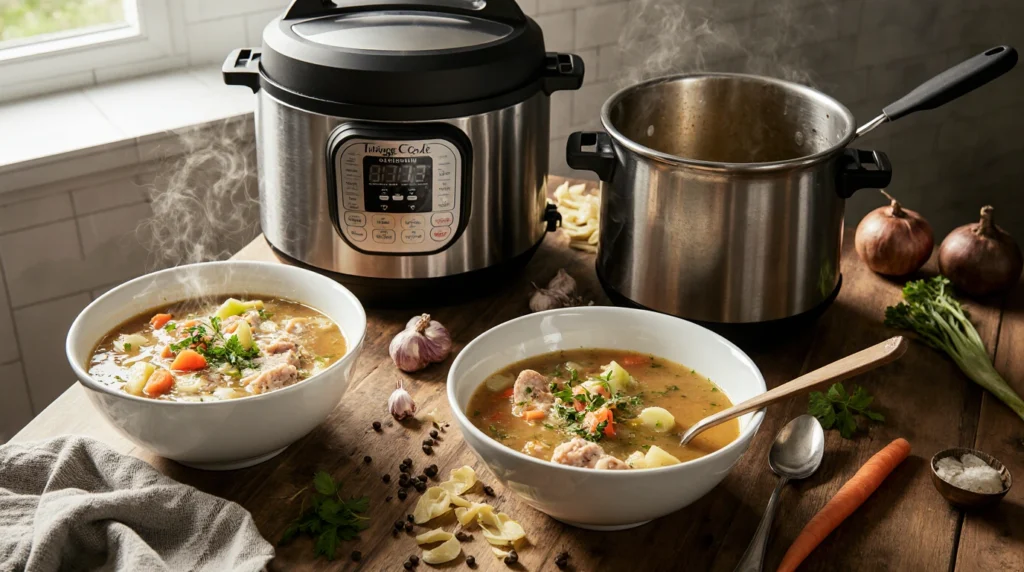
Now comes the easy part.
This recipe requires only a few simple steps.
Step 1: Sauté the Vegetables
Select the Sauté setting on your pressure cooker.
Heat the olive oil.
Add:
- Onion
- Carrots
- Celery
Cook for about 5 minutes, stirring occasionally.
When the onions become soft, add the garlic.
Cook for another minute until fragrant.
Why Sauté First?
This extra step builds deeper flavor by lightly caramelizing the vegetables before pressure cooking.
Step 2: Add the Chicken
Place the chicken into the pot.
Arrange it over the vegetables rather than pressing it into the bottom.
This allows the broth to circulate evenly around the meat.
Step 3: Pour in the Broth
Add:
- Chicken broth
- Bay leaves
- Thyme
- Salt
- Pepper
The liquid should fully surround the chicken without overfilling the pressure cooker.
Give everything a gentle stir.
Step 4: Seal the Pressure Cooker
Close the lid securely.
Set the pressure valve to Sealing.
Select High Pressure.
Cooking Time Guide
| Chicken Type | Pressure Cook Time |
|---|---|
| Boneless chicken breasts | 10–12 minutes |
| Boneless chicken thighs | 12–15 minutes |
| Bone-in chicken | 18–22 minutes |
| Frozen chicken | 15–18 minutes |
Step 5: Allow Natural Pressure Release
Once the cooking cycle ends, allow the pressure to release naturally for about 10 minutes.
After that, carefully perform a quick release if necessary.
Why Natural Release Matters
Natural release lets the chicken finish cooking gently.
This helps the meat stay tender instead of tightening up from a sudden pressure change.
Step 6: Shred the Chicken
Carefully remove the chicken from the pot.
Use two forks to shred the meat into bite-sized pieces.
Discard any bones and skin if using bone-in chicken.
Return the shredded chicken to the soup.
Step 7: Add Noodles (Optional)
If you’re making noodle soup, stir in the egg noodles after shredding the chicken.
Cook using the sauté function until the noodles become tender, usually 6 to 8 minutes.
Avoid pressure cooking the noodles with the rest of the ingredients, as they may become too soft.
Taste and Adjust Seasoning
Before serving, taste the soup.
You may wish to add:
- Extra salt
- Freshly ground black pepper
- Chopped parsley
- A squeeze of lemon juice for brightness
Small adjustments at the end can make a big difference in the final flavor.
Why This Method Produces Tender Chicken
The secret to tender pressure cooker chicken soup isn’t just the cooking time—it’s the combination of high pressure and natural release.
The sealed environment traps steam, allowing heat to penetrate the chicken evenly. This process keeps the meat moist while infusing it with the flavors of the broth, herbs, and vegetables. By the time you shred the chicken, it should pull apart easily with a fork, creating soft, juicy pieces that blend perfectly into the soup.
Pressure Cooker Chicken Soup: The Best Way to Make Tender, Flavorful Chicken Every Time
Tips for Tender Pressure Cooker Chicken Soup
Making delicious pressure cooker chicken soup isn’t difficult, but a few small techniques can take your soup from good to exceptional. These expert tips help ensure every bowl is packed with flavor and the chicken stays juicy.
1. Choose the Right Cut of Chicken
The cut of chicken you use affects both the texture and flavor of your soup.
- Chicken thighs are naturally richer and stay tender even after pressure cooking.
- Chicken breasts are leaner and shred beautifully when cooked properly.
- Bone-in chicken adds extra depth to the broth because the bones release collagen during cooking.
If your goal is the richest broth possible, bone-in thighs are an excellent choice.
2. Don’t Overcook the Chicken
Pressure cooking works quickly. Adding extra cooking time doesn’t make the chicken more tender—it can make lean cuts dry and stringy.
Always follow the recommended cooking times and allow a natural pressure release for the best results.
3. Use Natural Pressure Release
After the timer finishes, let the pressure release naturally for about 10 minutes before opening the valve.
This gentle finish allows the chicken to relax, keeping it moist and tender.
4. Taste Before Serving
The broth develops while cooking, but final seasoning should happen at the end.
Before serving, taste your soup and adjust:
- Salt
- Black pepper
- Fresh parsley
- Lemon juice (optional)
Even a small pinch of salt can brighten the entire pot.
5. Add Fresh Herbs Last
Delicate herbs such as parsley or dill lose their vibrant flavor if cooked under pressure.
Instead, stir them in just before serving for the freshest taste.
Common Mistakes to Avoid
Even a beginner-friendly recipe can go wrong if a few simple details are overlooked. Here are the most common mistakes and how to avoid them.
1. Overfilling the Pressure Cooker
Pressure cookers need space for steam to build.
Never fill your pressure cooker beyond the recommended maximum fill line.
2. Using Too Little Liquid
Pressure cookers rely on liquid to generate steam.
Always use enough broth to prevent the “burn” warning and ensure proper pressure builds.
3. Adding Pasta Too Early
Egg noodles and other pasta cook much faster than chicken.
If you cook them under pressure with the rest of the ingredients, they may become mushy.
Instead:
- Pressure cook the soup first.
- Add noodles afterward using the sauté function.
4. Forgetting to Remove Bay Leaves
Bay leaves provide wonderful flavor but should never be eaten.
Always remove them before serving.
5. Skipping the Sauté Step
Although it’s tempting to skip sautéing, doing so means missing out on extra flavor.
Lightly cooking the onions, celery, carrots, and garlic first builds a richer broth.
Pressure Cooker Chicken Soup Variations
Once you’ve mastered the classic recipe, you can easily customize it to suit your family’s preferences.
Creamy Pressure Cooker Chicken Soup
For a richer soup, stir in one of the following after cooking:
- Heavy cream
- Half-and-half
- Cream cheese
- Coconut milk (for a dairy-free option)
This creates a velvety texture that’s perfect for colder months.
Chicken Vegetable Soup
Boost the nutritional value by adding more vegetables.
Great choices include:
- Peas
- Corn
- Green beans
- Spinach
- Zucchini
- Bell peppers
Add delicate vegetables toward the end so they don’t overcook.
Low-Carb Chicken Soup
If you’re reducing carbohydrates, replace noodles with:
- Cauliflower rice
- Zucchini noodles
- Cabbage
- Extra mushrooms
You’ll still enjoy a hearty, satisfying bowl without the pasta.
Spicy Chicken Soup
Add a little heat with:
- Jalapeños
- Cayenne pepper
- Crushed red pepper flakes
- Chipotle powder
Finish with fresh cilantro and a squeeze of lime for extra flavor.
Nutrition Information
The exact nutritional values depend on your ingredients, but here’s an approximate breakdown for one serving.
Estimated Nutrition Per Serving
| Nutrient | Amount |
|---|---|
| Calories | 290 |
| Protein | 30 g |
| Fat | 10 g |
| Carbohydrates | 16 g |
| Fiber | 3 g |
| Sodium | Varies depending on broth |
This recipe provides a balanced combination of lean protein, vegetables, and flavorful broth, making it a satisfying meal for lunch or dinner.
Best Side Dishes to Serve with Pressure Cooker Chicken Soup
A bowl of chicken soup is delicious on its own, but the right side dish can turn it into a complete meal.
Classic Pairings
- Crusty artisan bread
- Garlic bread
- Dinner rolls
- Buttermilk biscuits
- Saltine crackers
- Oyster crackers
These sides are perfect for soaking up every bit of the flavorful broth.
Healthier Side Dishes
If you’re looking for lighter options, try serving your soup with:
- Mixed green salad
- Roasted Brussels sprouts
- Steamed broccoli
- Roasted asparagus
- Fresh fruit salad
These sides add freshness and balance to the meal.
How to Store and Reheat Pressure Cooker Chicken Soup
One of the best things about pressure cooker chicken soup is that it stores well, making it ideal for meal prep.
Storage Guide
| Storage Method | Time |
|---|---|
| Refrigerator | 3–4 days |
| Freezer | Up to 3 months |
Refrigerating
Allow the soup to cool before transferring it to airtight containers.
Store noodles separately if possible to prevent them from becoming overly soft.
Freezing
Freeze the soup in individual portions for quick and convenient meals.
If you plan to freeze it, consider leaving out the noodles and adding fresh ones after reheating.
Reheating Methods
Stovetop
Pour the soup into a saucepan and heat over medium-low heat until warmed through.
Microwave
Heat individual portions in 1-minute intervals, stirring between each interval.
Pressure Cooker
Use the Keep Warm or Sauté function to gently reheat larger batches.
Avoid pressure cooking the soup again, as it may overcook the chicken and vegetables.
Frequently Asked Questions About Pressure Cooker Chicken Soup
How long does pressure cooker chicken soup take?
From start to finish, you can expect the recipe to take about 45 to 60 minutes, including preparation, pressure build-up, cooking, and natural pressure release.
Can I use frozen chicken in pressure cooker chicken soup?
Yes. Frozen chicken works well in a pressure cooker. Simply increase the cooking time according to the thickness of the chicken and ensure it reaches a safe internal temperature of 165°F (74°C) before serving.
What is the best chicken for pressure cooker chicken soup?
Bone-in thighs provide the richest flavor, while boneless chicken breasts offer a leaner option that shreds easily. Both work well depending on your preference.
Can I cook noodles directly in pressure cooker chicken soup?
It’s possible, but cooking them separately or after pressure cooking helps maintain their texture and prevents them from becoming too soft.
Why does my pressure cooker chicken soup taste bland?
A bland soup often needs:
- More salt
- Better-quality broth
- Additional herbs
- A splash of lemon juice for brightness
Taste and adjust the seasoning before serving.
Can I make pressure cooker chicken soup ahead of time?
Absolutely. In fact, many people find the flavors become even better after the soup rests overnight in the refrigerator.
Is pressure cooker chicken soup healthy?
Yes. It can be a nutritious meal packed with lean protein, vegetables, vitamins, and minerals. You can easily customize it by using low-sodium broth, adding more vegetables, or choosing whole-grain noodles.
Final Thoughts
A homemade bowl of pressure cooker chicken soup proves that comfort food doesn’t have to take hours to prepare. With a pressure cooker, you can create rich broth, tender chicken, and perfectly cooked vegetables in a fraction of the time required for traditional recipes.
Whether you’re preparing a quick weeknight dinner, stocking your freezer with make-ahead meals, or cooking for someone who needs a comforting bowl of soup, this recipe delivers reliable results every time. The step-by-step method is simple enough for beginners yet flexible enough for experienced home cooks who enjoy adding their own personal touch.
The beauty of this recipe is its versatility. You can keep it classic, make it creamy, add extra vegetables, or give it a spicy twist. Once you’ve mastered the basics, you’ll have a dependable recipe you can adapt for every season and every occasion.
Ready to Make Your Own Pressure Cooker Chicken Soup?
Gather your ingredients, set up your pressure cooker, and give this recipe a try. You’ll be surprised at how quickly simple ingredients come together to create a hearty, homemade meal.
If you enjoyed this guide, save it for your next cooking day, share it with friends or family who love easy comfort food, and leave a comment with your favorite ingredient or variation. Your ideas might inspire someone else’s perfect bowl of pressure cooker chicken soup.